EB Eishaan Bharadwaj

NRI property desk

Buying in Maharashtra from eight thousand kilometres away

The problem is never finding a property. It is that nobody independent is standing in the room when it matters — at the site, at the registrar, and at the moment a payment demand arrives that does not match the construction.

The real risk

Distance doesn't cost you money. Asymmetry does.

Every NRI transaction I have seen go wrong went wrong the same way: the buyer was the only party to the deal who could not verify anything first-hand. A family member did a site visit and reported that it looked nice. A relationship manager forwarded a brochure. The sales team knew the buyer would not fly down to argue over a floor-rise charge.

The desk exists to close that gap. I act on your side of the table, on the ground, at every stage where physical presence changes the outcome — and I am compensated in a structure you agree to in advance, so you always know whose interest I am serving.

How the desk runs

What happens, and when

01

Mandate call

Scheduled around your timezone. Budget in your currency and in rupees, purpose (yield, future return, family use, parking capital), timeline, which market makes sense — Mumbai, the Third Mumbai growth nodes, Pune or the coast — and how you intend to hold and eventually exit the asset.
02

Shortlist with written rationale

Two or three options, each scored on the Capital Safety Filter, with entry price against comparable resale, achievable rent, and the exit case stated in writing. You should be able to forward it to your accountant and have it make sense without me.
03

Video diligence

Unedited walkthroughs — the actual unit, the actual floor, the approach road at peak hour, the construction stage of towers around it. Filmed live with you on the call where timezones allow, so you can direct where the camera goes.
04

Legal & document coordination

Your advocate runs the title search and reviews the agreement — I coordinate the flow of documents, chase the developer for what is missing, and make sure nothing is signed on a deadline manufactured by a sales team. Power of attorney arrangements coordinated where you cannot travel.
05

Negotiation & payment tracking

Price and inclusions negotiated against comparables. Then every demand letter checked against actual construction progress before you remit — the single highest-value thing anyone does for a remote buyer.
06

Handover, tenancy, and after

Snagging and possession attended in person. Then tenant sourcing, rent benchmarking and ongoing management if you want the asset to earn, plus a portfolio review every six months for as long as you hold it.

Before you transact

Five things to settle early

General orientation, not advice. Every one of these is worth an hour with a chartered accountant who handles non-resident clients — arranged before you shortlist, not after you book.

Account structure
Whether you fund the purchase through an NRE or NRO account materially affects how easily proceeds can be repatriated later. This decision is effectively made at the first payment, not at sale.
What you may buy
Residential and commercial property is generally open to non-resident Indians. Agricultural land, plantation property and farmhouses sit under separate restrictions. If a plotted "farm" scheme is being offered to you, establish exactly what the land is classified as before anything else.
Tax withheld at sale
Sale proceeds from a non-resident seller attract withholding at rates well above those for residents, and recovering an excess is a filing exercise. A lower-deduction certificate is applied for in advance — it cannot be fixed afterwards.
Representation
A properly drafted and attested power of attorney, limited in scope to the specific transaction, is what allows a purchase to complete without you flying in. A broad, open-ended POA is a risk you should not take.
Currency timing
On a construction-linked schedule you are remitting across two or three years. The exchange rate over that period can move your effective cost more than the negotiation did. Plan the remittance schedule as deliberately as the purchase.

I am a real-estate advisor, not a lawyer, tax adviser or authorised dealer. The above is orientation so you know what to ask. Rules under FEMA and the Income Tax Act change, and your position depends on your residency status and country of residence — take professional advice on all five points.
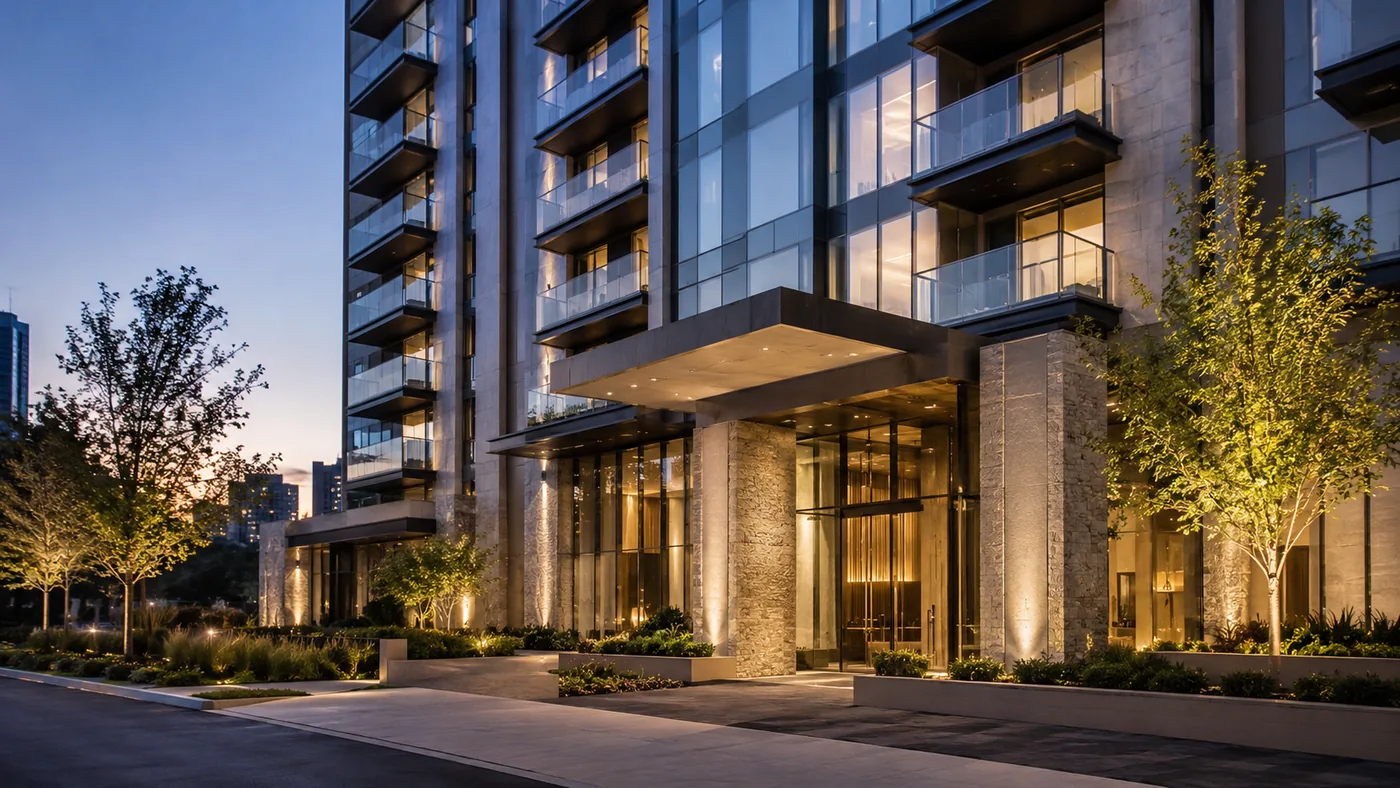
Arrival canopy of a premium residential tower at dusk

On the ground

Someone standing in the room, on your side of the table

Site visits, snagging, the registrar's office and every demand letter checked against actual construction — attended in person, so distance stops being an information disadvantage.

Coverage

Where the desk's clients are

Gulf

UAE, Saudi Arabia, Qatar, Oman

The largest group, and the most time-sensitive — calls run in the evening India time, which lands comfortably in the Gulf working day.

Asia-Pacific

Singapore & Australia

Close to Indian hours, which makes live video diligence straightforward. Typically yield-focused, with an eventual-return case in the background.

West

UK & United States

Widest timezone gap and usually the longest horizon. Documentation and POA coordination matter most here, because travel is least likely. Coastal second homes near the new airport are a recurring brief from this group.

Start with a call in your timezone.

Tell me where you are based and what you are trying to achieve. If an Indian property purchase is not the right use of your capital right now, I will tell you that on the first call.

WhatsApp